
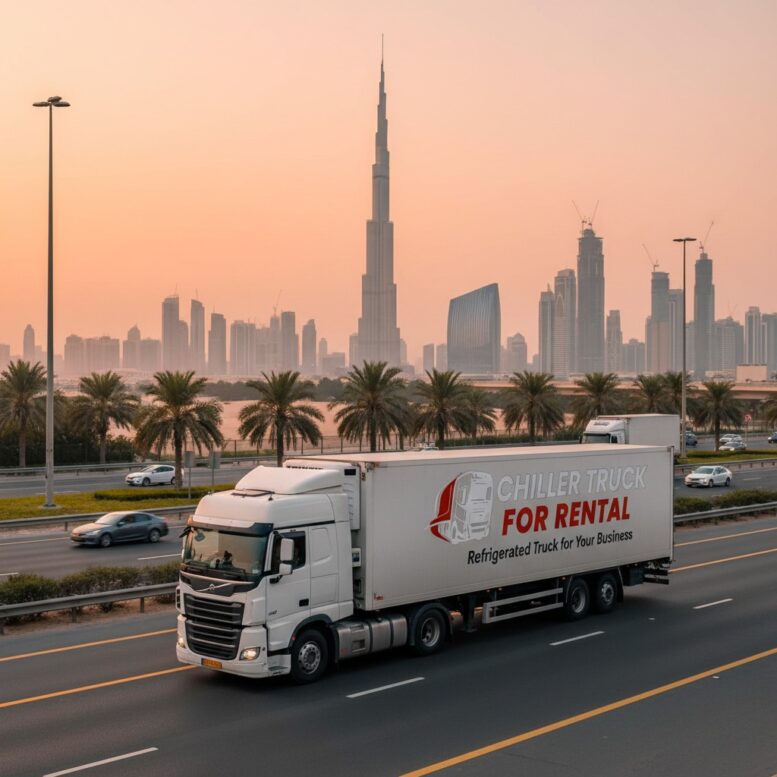
How to Choose the Right Refrigerated Trucks for Your Business: A Simple 5-Step Guide
If your business deals with fresh food, frozen goods, flowers, or any other temperature-sensitive product in the UAE, you already know that a reliable refrigerated trucks is more than just a vehicle—it’s a moving warehouse, a quality control station, and a key part of your brand’s promise. Choosing the wrong one can lead to spoiled cargo, lost money, and unhappy customers. But with so many options like chiller van rentals and large reefer trucks, how do you make the right choice?
You don’t need to be a logistics expert. At Chiller Truck Rental, we’ve helped hundreds of businesses, from small cafes to large distributors, find their perfect cold transport match. This guide breaks down the process into five simple, practical steps. By the end, you’ll know exactly what to look for in a refrigerated trucks that fits your budget, your cargo, and your business goals.
Table of Contents
Step 1: Know Your Cargo’s Exact Temperature Needs
This is the most important step. It’s not just “cold”—it’s precision. The wrong temperature can ruin a product as surely as dropping it.
- Chilled Goods (0°C to +8°C): Think fresh produce, dairy (milk, cheese, yogurt), fresh-cut flowers, some pharmaceuticals, and prepared meals. These need a chiller truck or a reefer set to a positive temperature. Freezing will damage them.
- Frozen Goods (-18°C and below): This is for ice cream, frozen meat and seafood, frozen vegetables, and frozen ready meals. These require a true freezer truck with powerful cooling and thick insulation to hold deep temperatures in the UAE heat.
- Specific Ranges: Some goods, like certain seafood or delicate pharmaceuticals, have narrow windows (e.g., +2°C to +4°C). You need a truck that can reliably hit and maintain that exact range.
Action Point: Check your supplier’s labels or product specs. What does it say? “Keep refrigerated,” “Store frozen,” or is there a specific number? Start there.
Step 2: Determine the Right Size and Capacity
Bigger isn’t always better. An oversized truck wastes fuel and money. An undersized one leads to overloading, which blocks airflow and causes uneven cooling (and spoiled goods).
Here’s a simple way to think about size:
- Small Vans (3-5 Ton): Perfect for last-mile delivery. Think of a bakery delivering to local cafes, a caterer heading to an event, or a florist making wedding deliveries. This is the classic chiller van rental solution for daily, agile operations.
- Medium Trucks (5-10 Ton): Ideal for medium-sized distributors, supermarket supply runs, or wholesalers moving larger quantities of produce or frozen goods within the emirates.
- Large Trucks (10+ Ton): Used for long-haul transport, bulk imports/exports, or supplying large warehouses. They have the largest capacity and longest range.
Ask yourself:
- What is the average volume of my delivery? (Think in pallets, crates, or cubic feet).
- Do I need space for a person to move inside to handle goods?
- Will my business grow soon? Renting offers the flexibility to scale up when needed.
Step 3: Understand the Key Features & Technology
Not all refrigerated trucks are built the same. Look for these non-negotiable features, especially in a demanding climate:
- Insulation Quality: This is the truck’s “thermos.” High-density foam in the walls, floor, and roof keeps the cold in and the desert heat out. Don’t compromise here.
- Refrigeration Unit Power: The unit must be powerful enough to pull down the temperature quickly and recover it fast after doors are opened for deliveries. Ask about the unit’s cooling capacity (in BTU/h).
- Temperature Monitoring & Logging: For many businesses, proof is as important as performance. Digital displays are standard, but for high-value goods, look for trucks with continuous temperature loggers. This creates a digital record of the entire journey, which is crucial for compliance and quality assurance.
- Airflow System: Proper cold air circulation prevents “hot spots.” Look for trucks with ducted or directed airflow systems that ensure even cooling from front to back.
- Reliability & Maintenance: Ask about the service history of the rental fleet. A well-maintained, newer truck is far less likely to break down on a critical run.
Step 4: Choose the Right Rental Model for Your Business
You have options. The right choice depends on your cash flow and operational needs.
- Short-Term/Daily Rental: Perfect for one-off events (a big wedding cater, a festival), seasonal peaks (Ramadan, holidays), or to cover your own truck during servicing. It’s the ultimate in flexibility.
- Long-Term/Lease Rental: If you need a refrigerated trucks consistently for months or years, this is the most cost-effective model. It often includes full maintenance and offers a fixed monthly cost for easier budgeting.
- With Driver vs. Self-Drive:
- With a Professional Driver: You get expertise and peace of mind. The driver handles the vehicle, route, and often the loading/unloading logistics. Perfect if your team doesn’t have the right license or you want to focus on other parts of your business.
- Self-Drive Rental: You have total control over the schedule. You’ll need a valid UAE driving license for the vehicle category. This is great for business owners or trusted employees who manage their own delivery routes.
Step 5: Partner with the Right Rental Company
Your refrigerated trucks is only as good as the company standing behind it. Don’t just choose the cheapest quote. Choose a partner.
Here’s what to look for in a refrigerated trucks or chiller van rental provider:
- Transparency: Clear, all-inclusive pricing with no hidden fees for mileage, insurance, or basic maintenance.
- Expertise: Do they ask questions about your cargo’s temperature? A good company will advise you, not just hand over keys.
- Fleet Condition: Request to see the truck beforehand. Is it clean? Is the interior hygienic and rust-free? This reflects their maintenance standards.
- Emergency Support: What happens if the truck breaks down at 3 PM on a Friday? 24/7 roadside assistance and a swift backup plan are essential.
- Local Knowledge: A company that understands UAE traffic, climate challenges, and logistics regulations will be a more valuable partner.
Common Mistakes to Avoid When Renting
- Guessing the Temperature: Assuming “cold is cold” is the #1 error. Confirm the exact need.
- Ignoring Pre-Cooling: Always run the truck’s refrigeration unit to reach the target temperature before loading your goods. Loading warm cargo into a warm truck is a recipe for failure.
- Overloading the Space: Blocking the air vents at the front or sides of the cargo area stops cold air from circulating. Always leave space for airflow.
- Choosing Based on Price Alone: The lowest rental rate might come with an older truck, poor insulation, or no support. The cost of one failed delivery could wipe out years of “savings.”
- Not Planning for Growth: If you’re about to land a big new client, consider a truck with a little extra capacity. Talk to your rental company about easy upgrade options.
FAQs About Renting a Refrigerated Trucks
Q1: What’s the difference between a refrigerated trucks and a chiller van?
A: A chiller van is a type of refrigerated trucks, typically smaller, designed specifically for the chilled temperature range (0°C to +8°C). A refrigerated trucks (or reefer truck) is the broader term for any temperature-controlled vehicle, which can often also operate as a freezer.
Q2: How much does it cost to rent a refrigerated trucks in the UAE?
A: Costs vary based on size, rental duration (daily rates are higher than monthly), and whether you need a driver. A small chiller van rental for a day is very affordable for a business, while a large, long-term freezer truck lease is a significant operational investment. Always get a detailed quote.
Q3: What license do I need to drive one?
A: For smaller vans (up to certain weights), a standard UAE light vehicle license may suffice. For larger trucks, a heavier vehicle category license is required. Your rental company can confirm this based on the specific vehicle.
Q4: Can I transport both chilled and frozen goods in the same truck?
A: Only in a multi-temperature reefer truck, which has separate, sealed compartments with independent temperature controls. Never mix them in a single compartment.
Q5: What happens if the refrigeration unit fails during my rental?
A: This is why Step 5 is crucial. A reputable company will have 24/7 support. They should immediately deploy a replacement vehicle or a technician to fix the issue to minimize the risk to your cargo.