
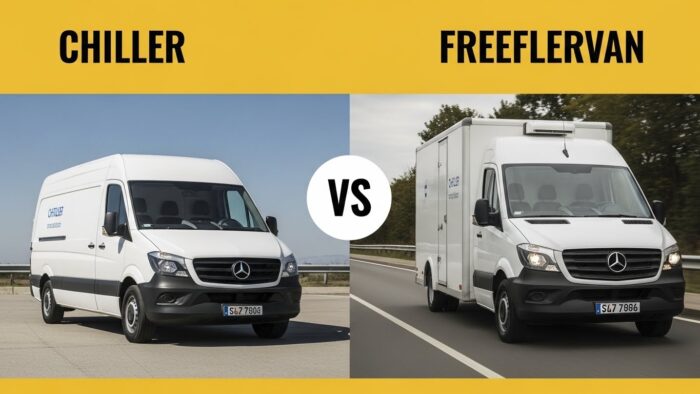
Chiller Van vs Freezer Van? Find the Right Solution for Your Business
Choosing the right refrigerated vehicle is one of the most critical decisions for businesses handling perishable goods in Dubai’s demanding climate. Selecting the wrong type can lead to spoiled products, financial losses, and damaged customer relationships. This guide provides a clear, detailed comparison between chiller vans and freezer vans, or chiller vans vs freezer vans.
the two primary types of refrigerated transport in Dubai. We’ll explore their distinct functions, ideal applications, and key specifications to help you determine exactly which solution aligns with your business needs and ensures your goods arrive in perfect condition.
Table of Contents
Understanding the Core Temperature Difference
The fundamental difference between these vehicles lies in the temperature range they maintain, which directly determines what they can transport.
Chiller Vans: The Guardians of Freshness (0°C to +8°C)
Often referred to as refrigerated vans, chillers are designed to keep products cold but not frozen. They create an environment similar to a domestic refrigerator, slowing bacterial growth and preserving freshness without causing ice crystal formation that can damage cell structures. Their primary function is to extend the shelf life of fresh goods during transit.
Freezer Vans: The Enforcers of Frozen Integrity (-18°C to -25°C and below)
Freezer vans are built for long-term frozen storage and transport. They maintain deeply sub-zero temperatures necessary to halt all biological activity, ensuring frozen goods remain solid, safe, and free from freezer burn. These units feature significantly more powerful cooling systems and thicker insulation to combat external heat.
Key Takeaway: The choice is not about “better” or “worse,” but about precise temperature matching. Using a chiller for frozen goods results in thawing and spoilage. Using a freezer for fresh produce causes irreparable freezing damage. Your cargo’s specific needs dictate the vehicle.
Detailed Comparison: Specifications and Applications
To make an informed decision, you must understand how these vehicles differ in construction and what each is designed to carry.
Technical Specifications and Build
| Feature | Chiller Van | Freezer Van |
| Core Temperature Range | 0°C to +8°C (often adjustable) | -18°C to -25°C (can go lower to -30°C) |
| Insulation Thickness | Standard (approx. 50-60mm) | Heavy-Duty (approx. 75-100mm or more) |
| Refrigeration Unit Power | Moderate, designed for above-freezing cooling | High-powered, built for extreme “pull-down” and maintaining deep freeze |
| Typical Fuel Consumption | Lower (less energy required to maintain mild temperatures) | Higher (significant energy needed to maintain sub-zero temps in heat) |
The heavier insulation and more robust machinery of a freezer van are direct responses to the physical challenge of maintaining a deep freeze against Dubai’s intense outdoor temperatures, which regularly exceed 40°C.
Cargo Applications: What Should You Transport in Each?
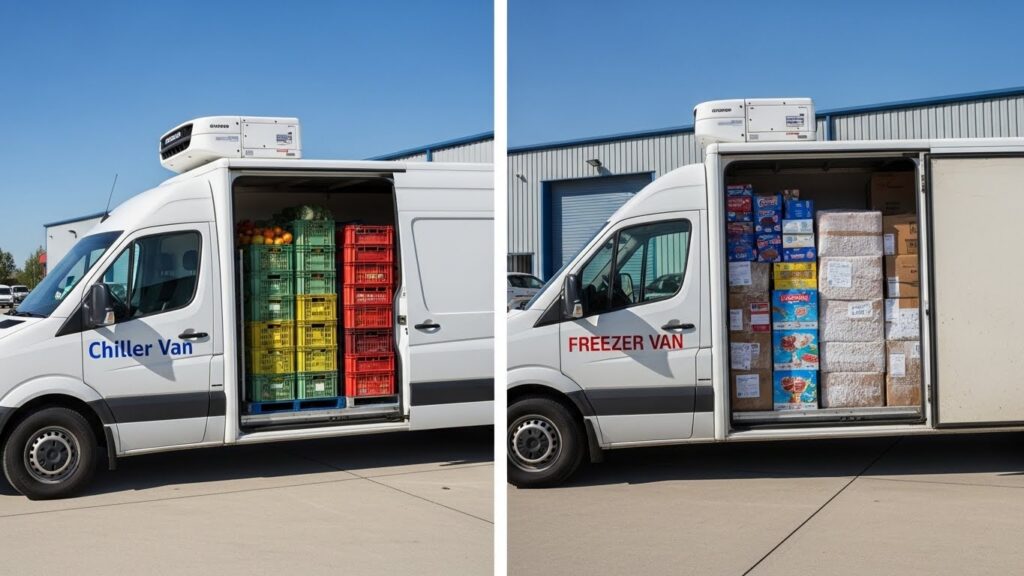
Opt for a chiller van for:
- Fresh Produce: Fruits, vegetables, and herbs that would be damaged by freezing.
- Dairy Products: Milk, yogurt, soft cheeses, and fresh cream.
- Fresh Flowers and Plants: Preserves vitality and prevents frost damage.
- Certain Pharmaceuticals: Many vaccines and medicines require a stable “cool chain” (2°C to 8°C).
- Prepared Foods & Catering: Chilled meals, salads, and ingredients for events.
- Beverages: Some wines, juices, and products where taste is altered by freezing.
Opt for a freezer van for:
- Frozen Proteins: Meat, poultry, and seafood stored at -18°C or below.
- Ice Cream & Frozen Desserts: Essential to prevent melt cycles that ruin texture.
- Frozen Prepared Meals: Ready-to-eat meals, frozen vegetables, and french fries.
- Certain Bio-Medical Samples: Specimens that require preservation at ultra-low temperatures.
- High-Value Frozen Goods: Any product where a breach in the frozen chain renders it unsellable.
Key Business Factors to Consider When Choosing
Beyond cargo type, several practical business considerations should guide your rental or purchase decision.
Operational Range and Door-Open Frequency
- Chiller vans are more forgiving for multi-stop urban delivery routes with frequent door openings. The temperature recovery to a cool (not deeply frozen) state is quicker.
- Freezer vans are ideal for longer hauls or fewer stops. Frequent opening in a hot climate causes significant temperature spikes, forcing the unit to work harder and increasing the risk of partial thawing on surface items.
Cost Implications: Rental and Operational
There is a direct cost correlation to the technical demands of the vehicle.
- Rental/Purchase Price: Freezer vans typically command a higher price due to their more powerful machinery and enhanced insulation.
- Fuel Consumption: Operating a freezer van is generally more expensive. The compressor runs more frequently and intensively to maintain sub-zero temperatures, leading to higher diesel costs.
- Maintenance: The high-powered refrigeration units in freezer vans may require more specialized, and potentially costly, servicing over time.
Compliance and Regulations in Dubai
Dubai Municipality and UAE food safety authorities have stringent regulations for transporting perishables. The required temperature logs and documentation will differ based on your declared cargo type. Using a vehicle incapable of maintaining the legally mandated temperature for your goods can result in fines, shipment seizures, or loss of trade licenses. A reputable refrigerated transport Dubai provider will ensure their vehicles are compliant and help you understand the necessary documentation.
What if your business needs both? Exploring Flexible Solutions
Many growing businesses face a common dilemma: they need to transport both chilled and frozen goods, but investing in two separate fleets is impractical.
Here are the flexible solutions offered by modern rental companies:
- Dual-Temperature/Multi-Temperature Vans: These innovative units have a physical partition separating the box into two or more compartments, each with independent temperature control. You could have one section set at -18°C for frozen meat and another at +3°C for dairy in a single delivery run.
- Modular Rental Agreements: Instead of a long-term lease on a single vehicle type, you can work with a provider to rent a chiller van for your daily fresh deliveries and a freezer van for weekly frozen stock runs. This scalable model matches your exact weekly needs.
- Consolidated Services: For businesses without daily frozen needs, it can be more efficient to use a specialized chiller truck rental service for daily fresh logistics and partner with a dedicated frozen haulier for less frequent bulk frozen shipments.
Conclusion: Making the Right Choice for Your Bottom Line
The decision between a chiller van and a freezer van boils down to a precise analysis of your product portfolio, delivery operations, and growth strategy.
- You likely need a CHILLER VAN if: Your business deals exclusively in fresh, never-frozen goods. This is the standard for grocery suppliers, florists, fresh caterers, and dairies.
- You definitely need a FREEZER VAN if: Your core business involves selling or distributing already-frozen products. This is non-negotiable for ice cream distributors, frozen food importers, and industrial meat suppliers.
- You should explore DUAL-TEMP or FLEXIBLE RENTAL if: Your business handles a mixed portfolio or you are expanding into new product categories. This is common for modern supermarkets, broadline foodservice distributors, and large catering companies.
Before committing, consult with a reputable refrigerated transport Dubai provider. Discuss your specific cargo, routes, and challenges. A professional can often recommend the most efficient and cost-effective solution, whether it’s a standard chiller, a heavy-duty freezer, or a flexible multi-temperature system—ensuring your cold chain is a reliable link in your business success, not its weakest point.